Leeuwarden is a beautiful old city. With more than 600 official monuments, there are many beautiful sights to be found in Leeuwarden. On our Walking Tours in Leeuwarden, we always show you a number of beautiful sights. Our guides have compiled an overview of the 11 most beautiful sights in Leeuwarden, accompanied by stunning photographs by Hans Jellema.
1. Oldehove
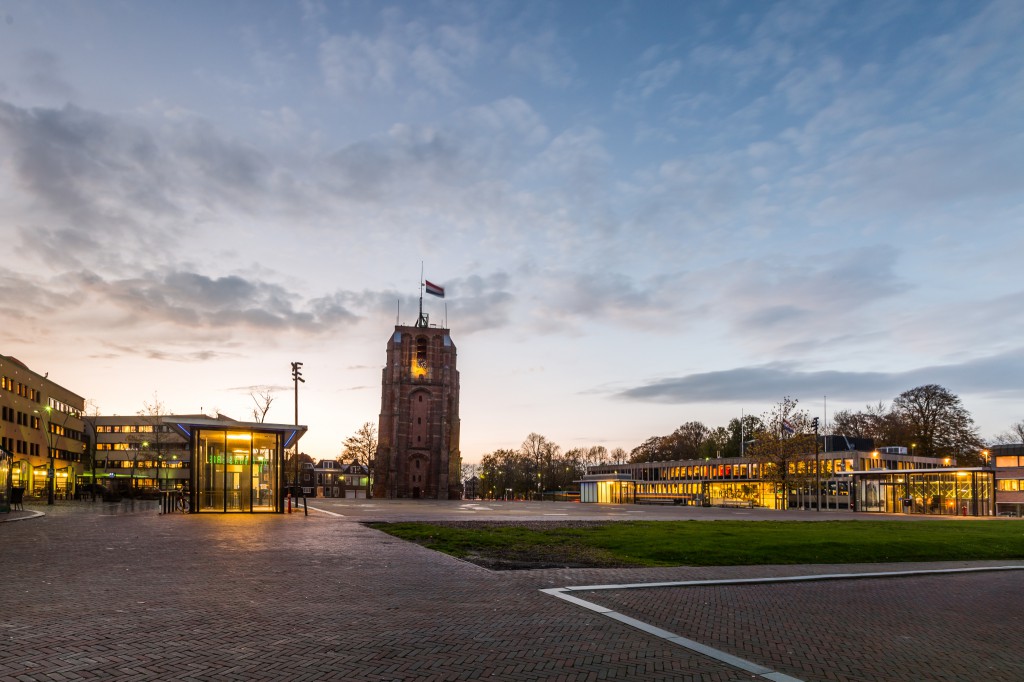
You cannot leave Leeuwarden without visiting the Oldehove. This is Leeuwarden’s most famous landmark. The leaning tower is the symbol of the city and the pride of its inhabitants. Construction of this leaning, crooked and unfinished tower began in 1529. A few years earlier, the city of Leeuwarden had become the capital of Friesland and wanted to show its importance. This meant building a large tower. But things went wrong during construction. The tower now leans 1.99 metres.
At the top of the tower, you have a beautiful view of the city and, if you are lucky, you can even see the Wadden Islands. To reach the top of the tower, you first have to climb 183 steps. Location: Oldehoofsterkerkhof, Open: Tue-Sun 13:00-17:00 (April – October), Admission: €3.50 for adults and €1.50 for children under 12
2. Centraal Apotheek
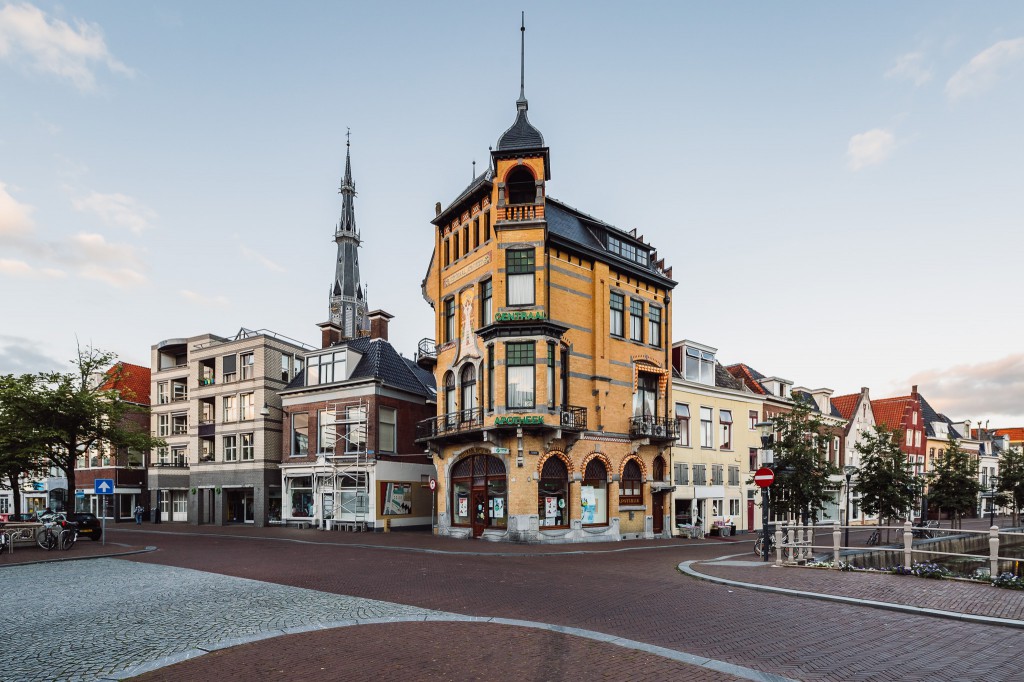
The Centraal Apotheek is one of the most beautiful Art Nouveau buildings in the Netherlands and one of most beautiful sights in Leeuwarden. Architect Gerhardus Berend Broekema, who designed this building in 1904, used many characteristic Art Nouveau elements. He played with symmetry, bluestone birds, yellow bricks and whip lines. But the most striking feature is the tile tableau depicting Hygieia, the Greek goddess of health. In her right hand, she holds a cup containing medicine. The snake of Asclepius, the symbol of medicine, winds around her left hand and drinks from the cup. Today, there is still a pharmacy in this building. Location: Voorstreek 58, Open: 8:30 a.m. – 6:00 p.m. (Mon-Fri)
3. Kanselarij
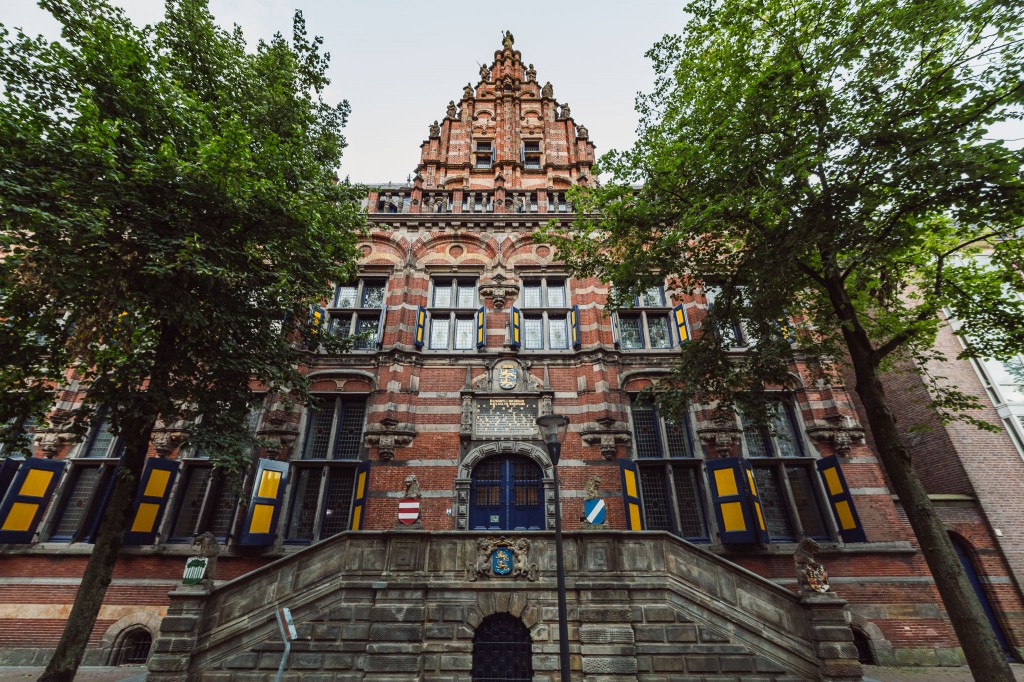
The Chancellery was the home of the ‘Hof van Friesland’. This was the highest legal authority in Friesland from 1515 to 1811. The building was constructed in 1566 and was probably financed by the Spanish King Philip II, who wanted to show who was boss in the Netherlands. On top of the stepped gable stood a statue of Charles V holding an imperial orb in his left hand and a sceptre in his right. The other eight statues are women symbolising virtues. On the left, from top to bottom, you see: Justice blindfolded with a sword and scales, Charity with a child, Hope with an anchor, and Faith with a cross and book. On the right, from top to bottom, you see: Prudence with a mirror and snake, Fortitude, Temperance with a jug, and Concord with a cornucopia. Location: Turfmarkt 11
4. Grote of Jacobijnerkerk
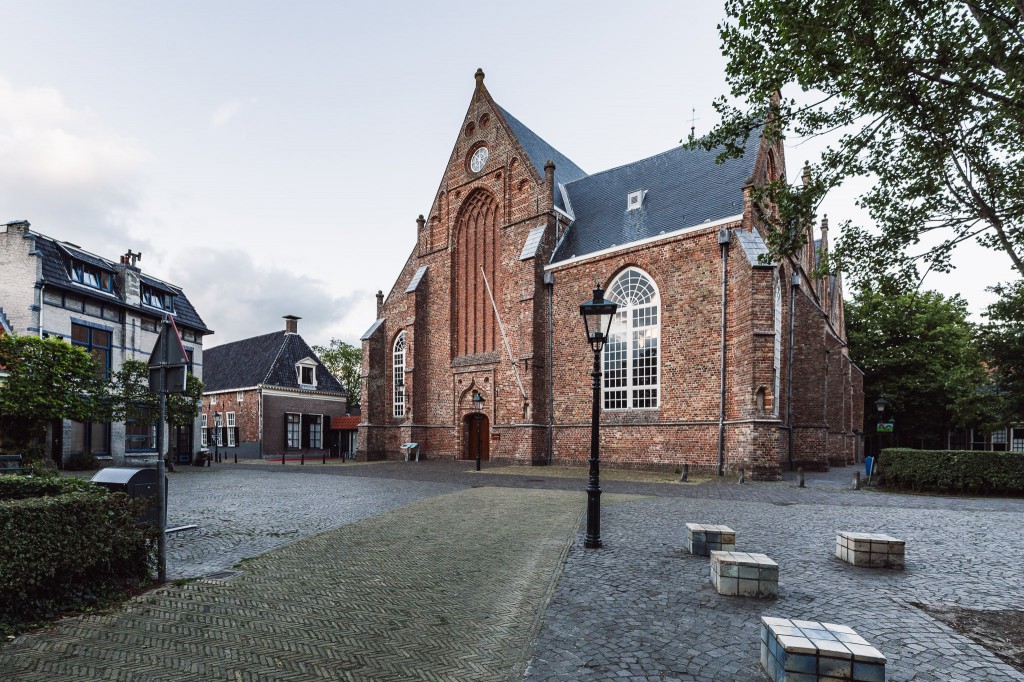
The Grote or Jacobijnerkerk is the oldest church in the city centre and was originally part of a Dominican monastery that was built here in 1245. In 1580, it became a Protestant church and not long after, the stadtholders also started attending church here. They were given their own entrance at the back, near the Orange Gate.
Later, they were also buried here, making this church one of three churches in the Netherlands where the ancestors of our royal family are buried. During the French Revolution, people were less fond of the Nassaus and everything that was privileged. A group of angry people entered the church to destroy everything. To make amends to the Nassaus, beautiful stained glass windows were installed. Location: Jacobijnerkerkhof 95, Open: Every Saturday 13:00-17:00, Tuesday-Saturday 11:00-16:00 (June-September 11), Admission: Free
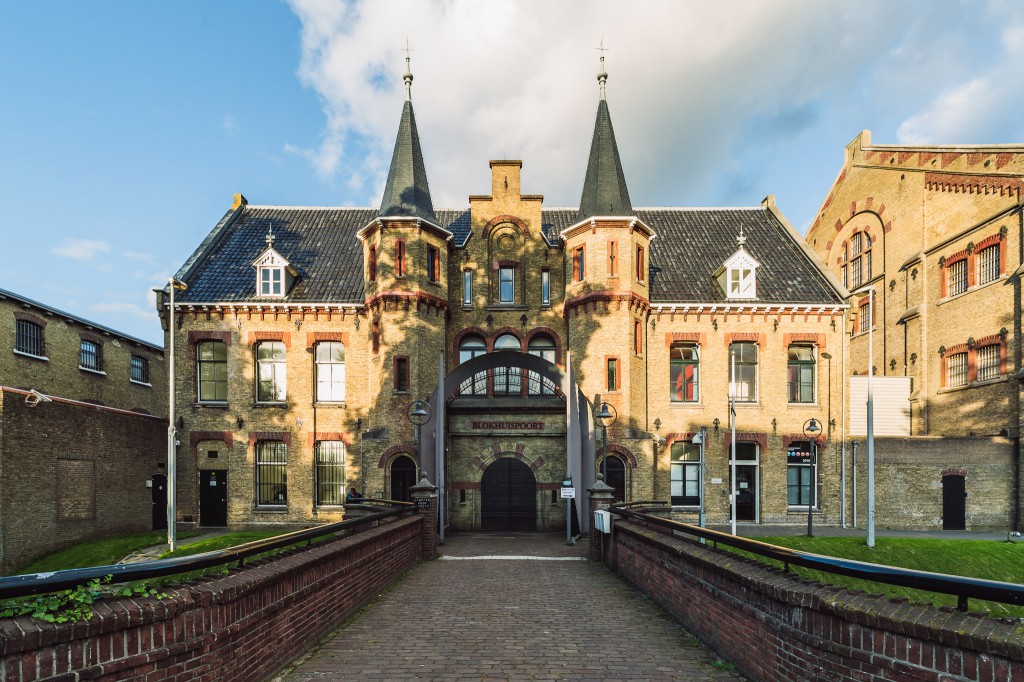
5. Blokhuispoort
Until 2007, the Blokhuispoort was still a real prison, but now it is one of the sights in Leeuwarden and has become a real must-visit. Between 1580 and 2007, this was a prison. But now it has been transformed into a very nice place where you can just walk in and out. Inside you will find Hostel Alibi, shops, dBieb, café de Bak and restaurant Proefverlof. And don’t forget to visit the H-wing. Here you will find the hostel and lots of nice shops. At the weekend, you can also take a guided tour with a former prison guard. These tours cost €10 per person. Location: Blokhuisplein 40, Open: Mon-Thu 09:00-17:00, Fri: 09:00-23:00, Sat: 12:00-17:00
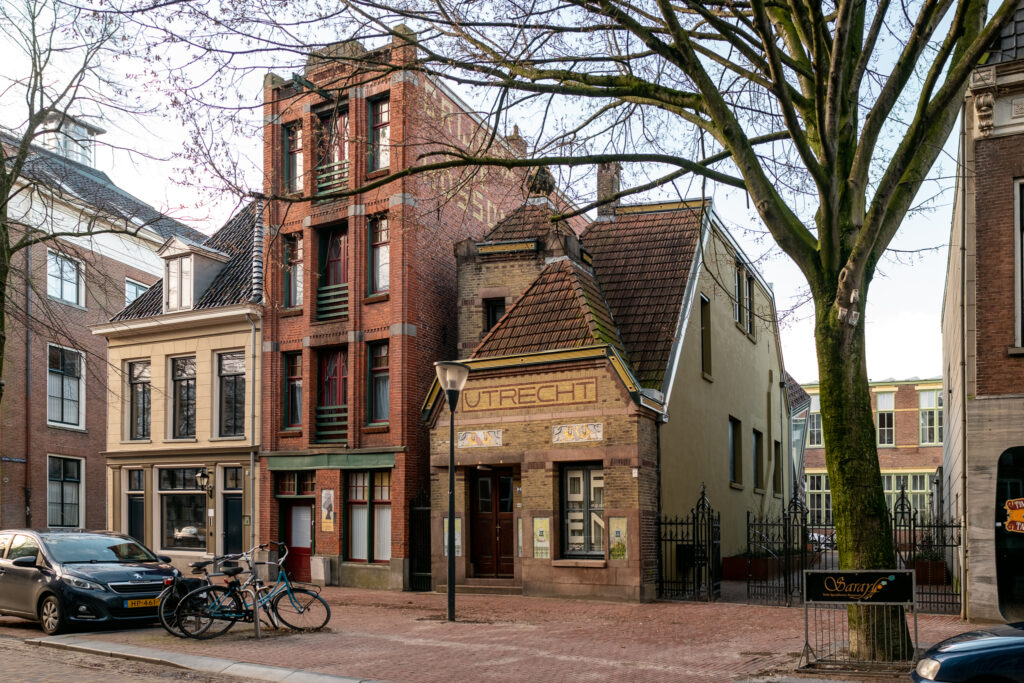
6. De Utrecht
The Utrecht is a beautiful Art Nouveau building dating from 1904. This landmark in Leeuwarden was designed by two students of Berlage: Staal and Kropholler. They were commissioned to design it by the Levensverzekeringsmij. De Utrecht life insurance company, which used the building as its office until the 1930s. After that, it was mainly used as storage space, which is why this gem of Art Nouveau has been preserved. The interior in particular is truly remarkable, with its richly decorated interior full of symbolism. The building is open to visitors every Friday and Saturday between 1 p.m. and 5 p.m. The extension with a ceramic roof by Tichelaar hosts temporary exhibitions. Location: Tweebaksmarkt 48
More sights in Leeuwarden? Join a Walking Tour
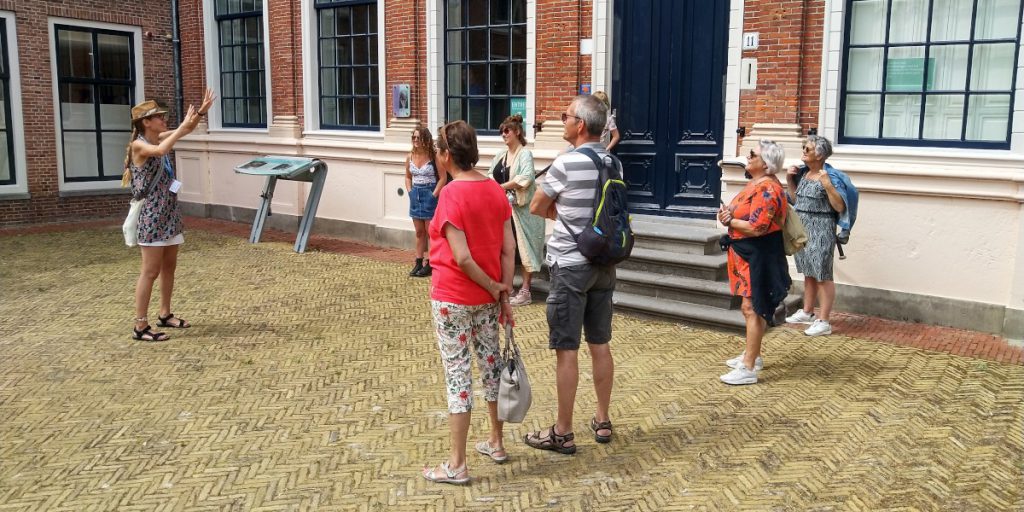
Are you coming to Leeuwarden soon? Then book a walking tour with A Guide to Leeuwarden. Every Tuesday to Sunday, you can join a Leeuwarden Free Tour. On Saturday we also offer a tour in English. A guide will take you on a tour and show you many more beautiful sights in Leeuwarden. The guide will also tell you lots of interesting stories that will bring Leeuwarden even more to life. In addition to these almost daily public tours, you can also book a private tour at any time of the week. It’s the perfect start to your stay in Leeuwarden.
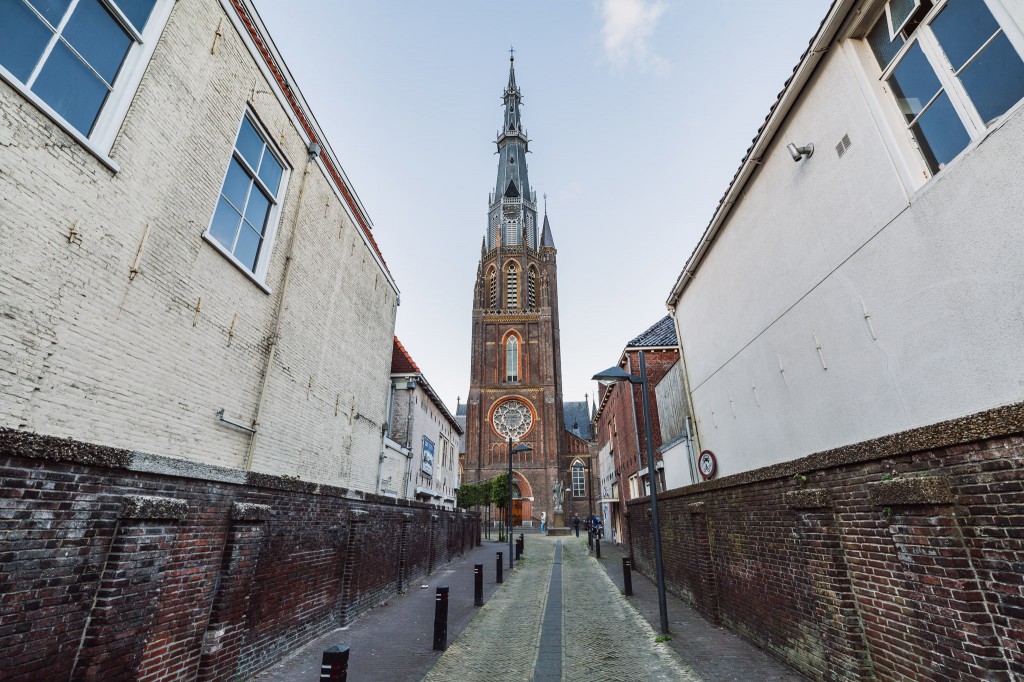
7. Sint Bonifatiuskerk
St. Boniface Church is a Roman Catholic church in Leeuwarden. It was built between 1882 and 1884 and designed by architect P.J.H. Cuypers, who also designed the Rijksmuseum and Amsterdam Central Station.
Although the church is relatively young, it has already had its moments. In 1947, an aeroplane hit the church tower. And in 1976, the top of the tower collapsed during a storm (see video on YouTube). In 1980, the tower was restored to its former glory. Today, you can view the church in all its splendour. In addition to Sunday services, the church is open to the public on Wednesdays and Saturdays from 2:00 p.m. to 4:00 p.m. The 85-metre-high tower is the tallest church tower in Friesland. Location: Bonifatiusplein 20 Open: Wed & Sat 2:00-4:00 p.m. Admission: Free
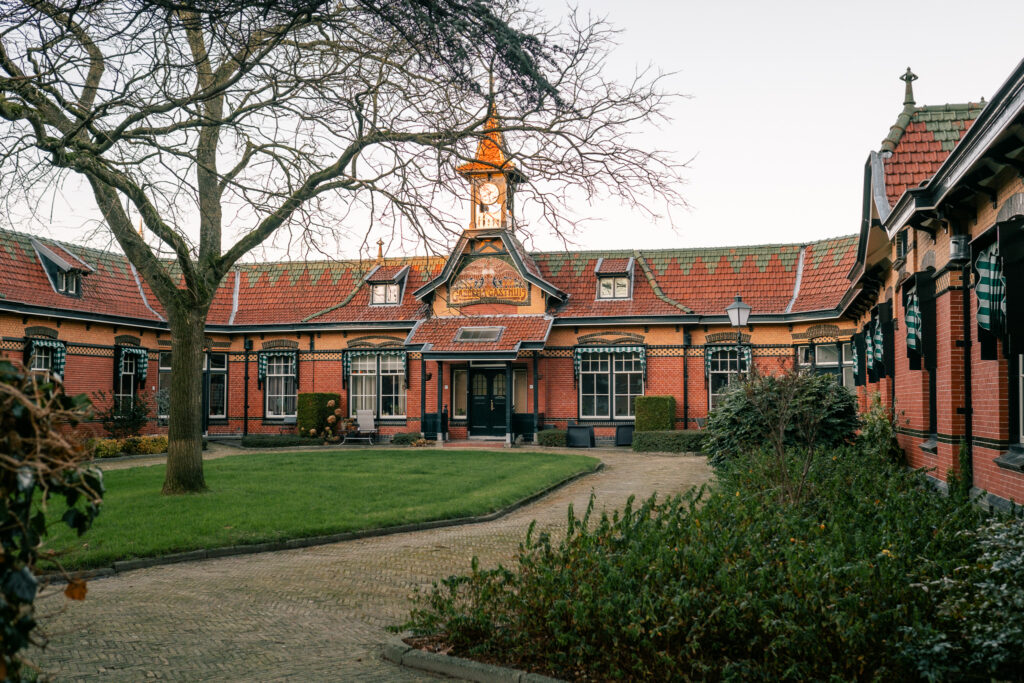
8. Gabbema Gasthuis
The Gabbema Gasthuis is an Art Nouveau courtyard dating from 1906. It was designed by local architect W.C. de Groot. Although it was slated for demolition in the 1970s, it is now one of Leeuwarden’s top attractions. The courtyard was built in a distinctive modern style with different colours of bricks and roof tiles, giving it a cheerful appearance. Above the entrance is a beautiful tile tableau full of symbolism. The eagle (the guest house) offers a rabbit as food for the birds (the residents) and spreads its wings protectively over them. Location: Wijbrand de Geeststraat 42
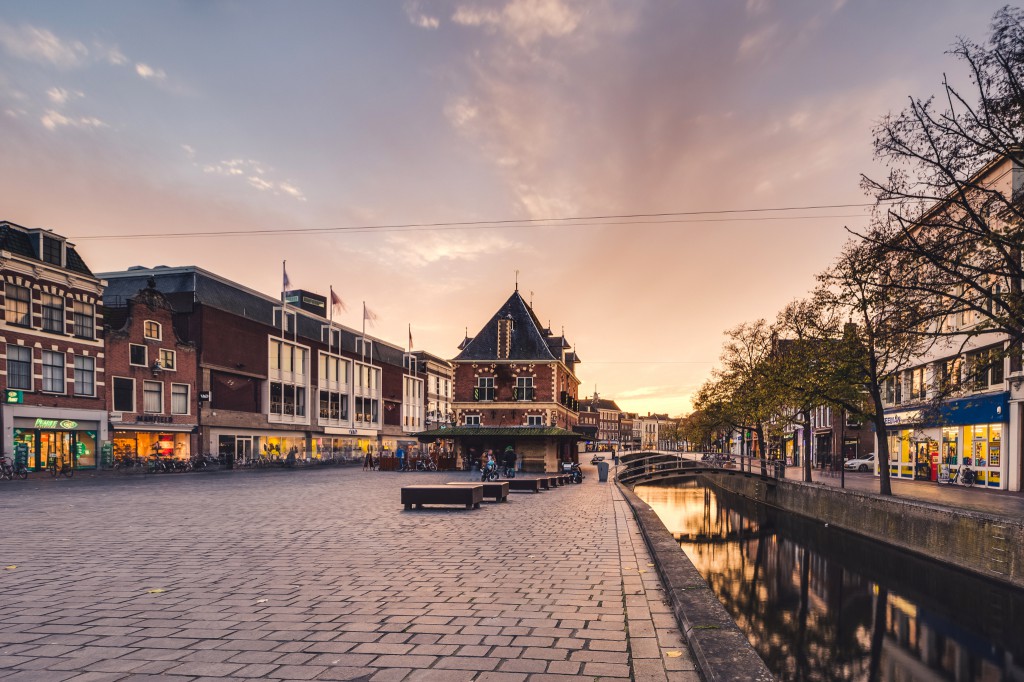
9. De Waag
The Waag is one of the city’s most iconic buildings and probably one of the most photographed sights in Leeuwarden. In the past, traders had to have their goods weighed here before they were allowed to sell them at the market. The Waag was important for a city to be seen as a reliable market. It also prevented conflicts between traders and customers. The city also received additional income, as merchants had to pay to have their products weighed.
The Waag in Leeuwarden was built in 1590 in Renaissance style. It was mainly used to weigh dairy products, as these were the most important and most sold products in Leeuwarden. The Waag was closed in 1880 and replaced by the Beursgebouw (now the university building). Today, there is a café in the Waag. Location: Waagplein
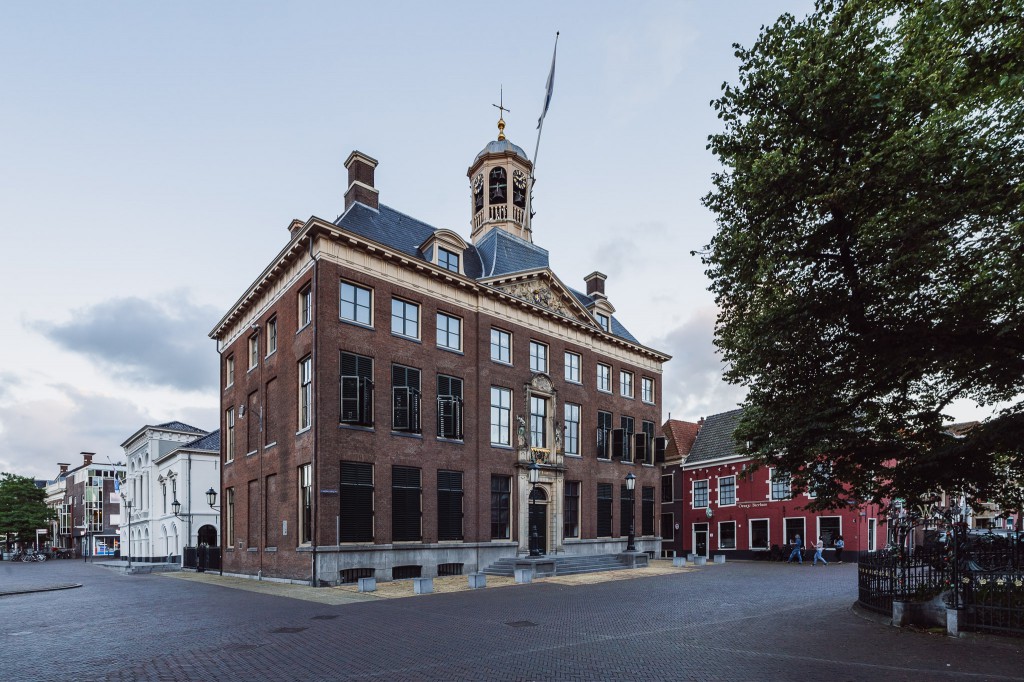
10. Stadhuis
Leeuwarden Town Hall was built on the foundations of the old Auckamastins. According to the inscription on the façade, the first stone was laid in 1715 by the three-year-old Willem Carel Hendrik Friso, son of Maria Louise and the future stadtholder Willem IV. Above the door, the words “peace and justice” can be read, with two statues depicting this. The town hall is still used as an office by the Mayor and Aldermen.
In 1760, the town hall was expanded with a new council chamber at the rear. This is now used as the main entrance. Behind the convex windows is the beautiful Orange Room. In the past, portraits of the stadtholders hung here, but unfortunately they did not survive the French Revolution. Fortunately, beautiful paintings of the House of Orange now hang here again. Location: Hofplein 38
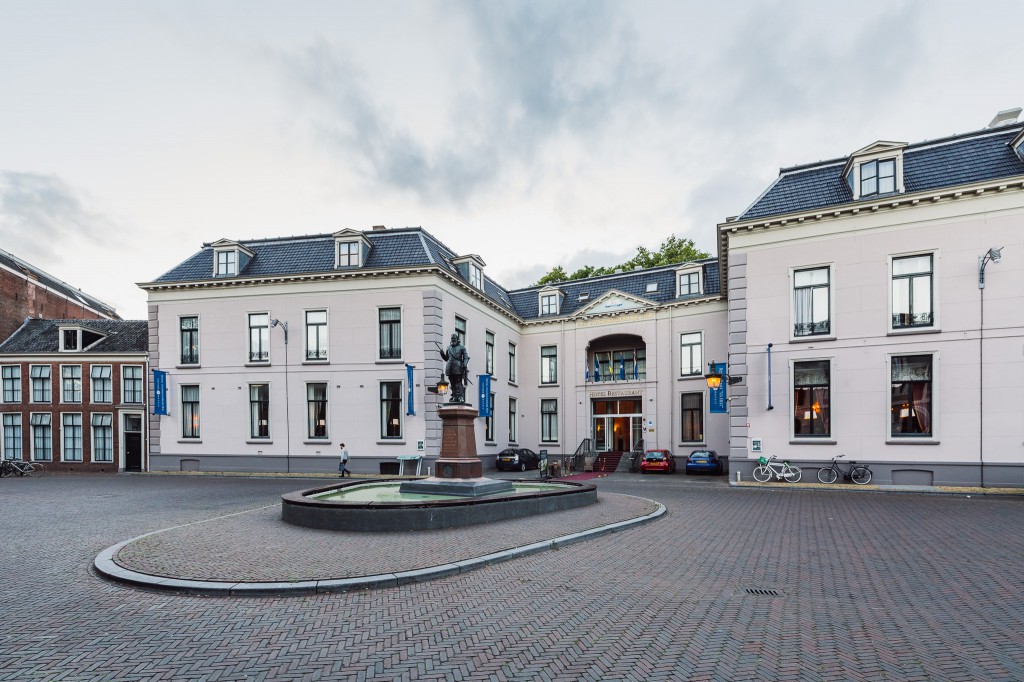
11. Stadhouderlijk Hof
The Stadhouderlijk Hof is the former residence of the stadtholders. Stadtholder Willem Lodewijk, also known as Us Heit, was the first resident in 1587. His statue stands in front of the building. Although the building now appears very uniform, it was originally made up of several different residences. Each stadtholder after Willem Lodewijk had it further embellished. After Willem Carel Hendrik Friso became stadtholder of the whole of the Netherlands in 1747, he moved to The Hague and the Nassaus only stayed at the Court sporadically. In the 19th century, when the Court had become a royal palace, the exterior was thoroughly renovated and given its current appearance. In 1971, Queen Juliana sold the Palace to the city, which has leased it to a hotel chain since 1996. Be sure to ask if you can see the beautiful Nassauzaal! Location: Hofplein 29
12. Mata Hari’s house of birth, no 33
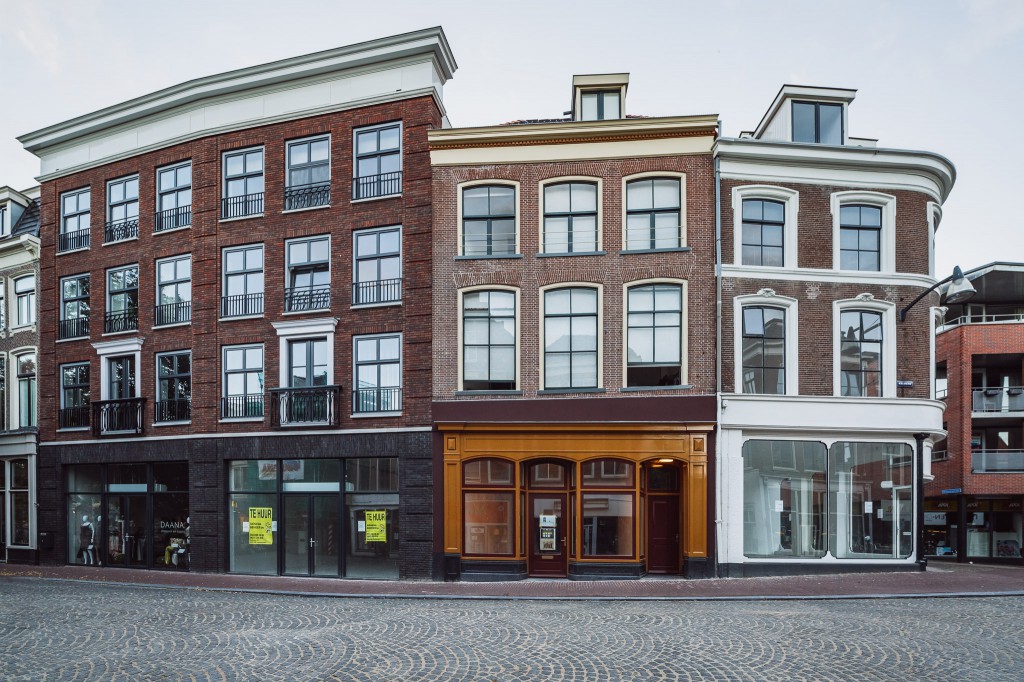
In 2026, it will be 150 years since Mata Hari was born in Leeuwarden, so we are adding one more. At first glance, this is the least remarkable building on this list. But at Kelders 33 stands the birthplace of Mata Hari. Don’t let anyone tell you that it burned down, because that’s not true. The birthplace can be recognised by its mustard-yellow façade, which has been restored to its former glory based on a drawing of Adam Zelle’s hat shop. Mata Hari was born here on 7 August 1876 as Margaretha Geertruida Zelle. That will be 150 years ago in 2026! In 1883, the family moved to a larger house at Grote Kerkstraat 212. In 1889, her father went bankrupt and the family fell apart. Mata Hari then lived with her mother for two years on the corner of Schoolstraat and Willemskade. After her mother’s death in 1891, she moved away from Leeuwarden at the age of 15.
After a failed marriage, she tried to earn money as a single woman by working as an exotic dancer. She called herself Mata Hari, which means “eye of the dawn” or “sun”. The mysterious mix of exotic music, her dance performance in which she removed her clothes, and her appearance made her extremely popular. During the First World War, she was allegedly asked by both the Germans and the French to spy for them. She was eventually arrested, sentenced and executed by the French in October 1917. Location: Kelders 33
Are you curious to see these sights in Leeuwarden for yourself? You can join our guides on a walking tour in Leeuwarden almost every day. Our guide will also show you other sights and tell you the most interesting stories about them. Or check out more tips about Leeuwarden.